Legendary Tales 2
- 4.6
- Rating
- 1.00M
- Installs
- Free
- Price

 Analysis by App-foxy
Legendary Tales 2 is the kind of adventure game that makes a strong first impression without demanding that I learn a complicated control scheme. Its appeal comes from the feeling that every new location, conversation, and puzzle may expose another piece of a larger secret. I found it easy to start, but the more important question is whether that curiosity survives after the opening novelty wears off. In my experience, this game has enough atmosphere and story momentum to earn repeated sessions, although its slower pace and occasional friction will not suit everyone.
Developed by FIVE-BN GAMES, it is a free adventure game for players who prefer exploration, riddles, hidden details, and narrative discovery over fast reflexes. It is rated for Everyone, which makes it approachable for a broad audience, but that does not mean every puzzle will feel simple. The game expects attention. If you rush through dialogue or tap randomly around a scene, you can easily lose the thread of what you are supposed to notice.
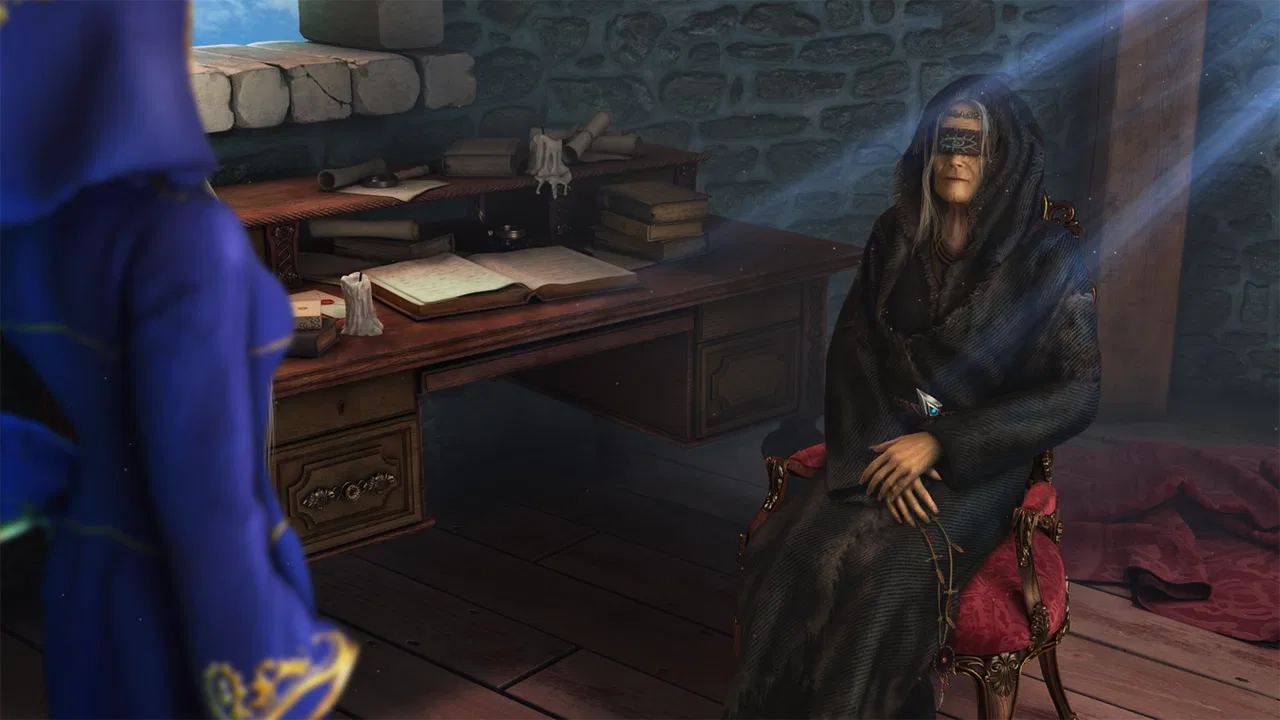
The store summary describes an undiscovered secret capable of shaking a familiar world. I would not treat that as a complete explanation of the experience. What matters in play is the way the story gives ordinary-looking places a second layer. A room may be useful because of an object, a clue, or a visual detail rather than because it looks important at first glance. That habit of looking twice is central to the game’s identity.
You May Also Like

 Blood Strike: 2.5 Anniversary
Blood Strike’s Loadouts Turn Every Drop Into a Tactical Gamble
A close look at Blood Strike’s custom loadouts: how fast access to signature weapons reshapes its battle royale rhythm, rewards preparation, and narrows the gap between fights.

 Pandora - Music & Podcasts
Pandora’s Music Is Easy to Start, but Harder to Recover
Pandora’s strength is its low-effort path from a seed to a station. Its weak spot is how much confidence it asks you to place in connection, setup, and quiet recovery.

 8 Ball Pool
 Is Built on Rivalries, Rematches, and Routine
A close look at the rivalries, rematches, shared routines, and unanswered safety questions that turn a quick pool match into a persistent mobile community.

 Samsung Music
’s Quiet Strength Is Playing What You Already Own
Its reach comes less from spectacle than from dependable access to a personal library. That simplicity is both the app’s strongest retention engine and its ceiling.

 AccuWeather: Weather Radar
AccuWeather Review: A Quick, Clear Forecast for Everyday Decisions
For everyday plans, the best forecast is the one you can understand quickly. AccuWeather makes rain timing, radar, and local conditions easy to act on, with a few trade-offs.

 Hill Climb Racing
Why Hill Climb Racing Still Turns Crashes Into One More Run
A tiny car, a bumpy hill and one more upgrade: Hill Climb Racing keeps resurfacing because its simple chaos makes every near-miss feel personal.
More From Our News Desk



Why the opening week works so well
My first sessions were powered by a simple loop: explore a scene, collect something that seems insignificant, connect it with a clue, and then return with a better understanding of what the game is asking. That rhythm is comfortable for short evening play because progress usually comes from thinking rather than from building a powerful character or mastering timing-based combat. I could stop after solving one problem and still feel that the session had a clear result.
The opening also benefits from the game’s mystery-first structure. Instead of presenting a checklist of unrelated tasks, it encourages me to wonder why a detail matters. That makes even a small discovery feel useful. The best moments are not necessarily the most dramatic ones; they are the moments when two previously separate clues suddenly fit together.
For a new player, my first practical recommendation is to slow down before using every item immediately. I found that examining the surroundings carefully was more valuable than trying every object on every possible location. When I was stuck, I had better results by reviewing the story context and asking what the scene was trying to communicate than by tapping across the screen without a plan.
That approach is especially helpful on a phone. Touch controls are convenient, but they can also make a crowded scene feel less precise than it would on a larger display. I preferred playing with the device held steadily and using deliberate taps rather than quick repeated touches. This is a small adjustment, yet it reduces the chance of overlooking an interactive detail or opening the wrong object while trying to inspect something nearby.
The game is free to download, which lowers the barrier to trying it during a commute, a quiet lunch break, or a relaxed evening at home. It also includes optional purchases priced from $0.99 to $14.99 per item. I would begin without spending anything and decide later whether the experience is holding my attention. That gives the opening chapters a fair chance to prove their value instead of turning the first session into a shopping decision.
Its reception suggests that many players find the overall package convincing: the game has a 4.6 average from around 36 thousand ratings and has passed one million installs. Those figures do not replace personal experience, but they fit my impression that this is a well-established choice within mobile adventure games rather than an obscure experiment that feels unfinished from the start.
The habits that make the puzzles less frustrating
One useful habit is keeping a mental distinction between an item that is clearly needed now and an item that may become relevant later. Adventure games can make every object feel urgent, but forcing a solution often creates confusion. I had a smoother time when I treated inventory discoveries as pieces of a chain instead of demanding an immediate answer from each one.
I also recommend taking a moment to read dialogue rather than skipping through it. In this game, narrative information is not merely decoration. It helps establish why a location matters and can change how I interpret a clue. If I ignored the conversation around a puzzle, I was more likely to see it as an arbitrary lock; when I followed the context, the same puzzle felt more connected to the story.
A third tip is to avoid playing while distracted. This is not a game I would choose when I have only one eye on a television show or when notifications are constantly interrupting me. Its satisfaction comes from noticing relationships, and that kind of attention is easy to lose. A focused session of moderate length worked better for me than a long, fragmented one.
What remains valuable after the novelty fades
The first-week question is easy to answer: yes, the mystery creates enough momentum to keep me returning. The month-to-month question is harder, because a story-driven adventure does not offer the same repeatable structure as an endless puzzle game or a competitive title. Once I know the major revelations and solutions, the experience naturally changes. The value shifts from surprise to atmosphere, memory, and the pleasure of completing a carefully arranged journey.
That means Legendary Tales 2 is better understood as a substantial adventure to finish than as a daily habit app. I would not expect a reason to open it every day indefinitely. Instead, I see it working well as a game I return to several evenings in a row, then put aside, and perhaps revisit when I want a slower narrative experience. Its lasting space on my device depends on whether I enjoy that kind of seasonal, chapter-based relationship with a game.
For players who like replaying stories, a second run can still have value because familiar scenes may reveal how early details support later events. However, I would not choose it primarily for endless replayability. The strongest reward is discovery, and discovery naturally becomes less powerful once I remember the path. If you want a game that produces fresh challenges every time you open it, a procedural puzzle title or a competitive adventure would probably serve you better.
There is also a practical advantage to its slower design. I do not need to maintain a daily streak, keep up with other players, or worry that missing a week will put me behind. That makes it a good fit for someone who wants entertainment without another obligation. I could leave it alone for a while and return when I had the concentration for it, rather than feeling punished for taking a break.
For families, the Everyone rating makes the game broadly accessible, but I would still consider the individual player’s patience. A younger player who enjoys stories and visual searching may find it welcoming, while someone expecting constant action may lose interest quickly. The age rating says something about general suitability; it does not promise that every puzzle is equally easy or that every player will understand the narrative at the same pace.
Where it sits beside other mobile adventures
Compared with action-heavy adventure games, this one gives up speed in exchange for observation. There is less emphasis on reflexes and more on interpreting what is in front of me. That makes it a better choice for relaxed play, but a weaker choice when I want movement, combat, or immediate excitement.
Compared with pure hidden-object games, it offers more motivation to care about the surrounding mystery. Searching a scene is not the whole point; the objects matter because they connect to a broader situation. On the other hand, players who want short, self-contained visual searches may find the story progression slower than expected.
Compared with premium story adventures that charge once and avoid in-app purchases, the free entry point is appealing, but the optional purchase structure deserves attention. I prefer to see whether I am comfortable with the pacing before buying anything. This is not a criticism of the model by itself; it is a reminder that the best value depends on how much of the journey you want and how patient you are with the game’s rhythm.
Maintenance, friction, and the reasons I might stop playing
The maintenance burden is fairly light in the sense that the game does not need to become part of my daily routine. I do not have to monitor a schedule to preserve progress or compete with a changing community. That is a genuine long-term strength. The main maintenance task is mental: remembering where I left off, what clues I have already seen, and which unresolved thread deserves attention.
That memory burden can become noticeable after a long break. When I returned without remembering the previous scene, I had to reconstruct the situation from the available story context. Players who regularly pause narrative games may want to finish a clear section before putting the phone away and make a quick personal note about the next objective. This is not glamorous advice, but it prevents a lot of aimless tapping later.
The biggest source of fatigue is the possibility of feeling stuck without knowing whether the problem is logical or simply a missed interaction. In an adventure game, one overlooked detail can make every later action seem wrong. I found that frustration was manageable when I searched methodically, but it grew when I repeated the same actions without changing my approach.
Another potential weakness is pacing. The game’s atmosphere benefits from taking its time, yet that same patience can feel like delay when I am eager for the next major revelation. The experience is not ideal for someone who wants a constant stream of rewards. Its best scenes ask me to absorb information, inspect the environment, and wait for the connection to become clear.
Touchscreen play can add another layer of friction. Small visual elements are satisfying to discover, but they are also easier to miss on a compact phone. I would choose a larger screen when possible, especially for a long session. A tablet is not essential, but it can make careful examination more comfortable and reduce accidental taps.
The purchase range also affects how I judge the game’s long-term value. Since the initial download is free, I can test the tone, puzzle style, and pacing before committing money. My advice is to treat purchases as optional support for an experience I already know I enjoy, not as a shortcut to deciding whether the game is good. If the slower sections already bother you, spending more will not change the game’s basic personality.
The current version is 1.0.2.1597.1691, and the game runs on Android 7.1 or later. That makes it accessible to people using older compatible devices, although actual comfort will still depend on screen size and general performance. I would check the device requirement before installing on an older phone, then give the game a proper uninterrupted session rather than judging it from a few rushed minutes.
Who should make room for it
I would recommend it to players who enjoy mysteries that unfold through exploration, visual clues, and connected puzzles. It is particularly suitable for someone who wants a calm game after work, a story to follow over several evenings, or an adventure that does not require fast reactions. It can also work for a player who has enjoyed other FIVE-BN GAMES adventures and wants another narrative journey with a similar patient mindset.
I would be more cautious if you prefer constant action, competitive progression, or a game built around repeatable daily challenges. It is also not my first recommendation for someone who becomes irritated by searching a scene several times or who wants every objective to be explained immediately. The game asks for curiosity and a willingness to sit with uncertainty.
For an everyday scenario, I can imagine playing it during a quiet evening when I have thirty minutes and want something more absorbing than scrolling but less intense than an action game. I would complete one investigation step, stop at a natural break, and return the next night. That pattern suits the game far better than trying to squeeze it into a few seconds between unrelated tasks.
My long-term verdict
After the opening mystery loses some of its initial force, Legendary Tales 2 still has a clear place for the right player. Its lasting value comes from the quality of its journey, not from an endless stream of new content or a permanent daily routine. I appreciate that distinction. It does not need to occupy my attention every day to be worthwhile; it only needs to make me want to continue when I return.
My recommendation is to try it as a focused, story-led adventure rather than as a forever game. Start free, play patiently, and judge it by whether the atmosphere and puzzle connections make you curious enough to come back. If they do, the absence of pressure is refreshing. If you need rapid action or unlimited replay value, the same qualities will feel restrictive.
In the end, I would keep it installed while I was actively working through its mystery, then decide whether I wanted to preserve it for a future replay. That is a more honest kind of lasting value than claiming it belongs in every player’s permanent rotation. For me, the balance is favorable: the first week is compelling, the month-to-month relationship is flexible, and the maintenance burden is modest. The game earns space when I want thoughtful exploration, but it does not pretend to replace every other kind of adventure.
With an average rating of 4.6, more than a million installs, a free starting point, and a broad Everyone rating, it is easy to see why the game attracts attention. My own reason for recommending it is more specific: it rewards the player who looks carefully, remembers context, and enjoys letting a secret unfold at its own pace. That is not a universal formula, but for the right friend, it is exactly the kind of quiet adventure I would suggest.
FAQs for Legendary Tales 2
01What is Legendary Tales 2 about?
Legendary Tales 2 is a story-driven hidden-object adventure game that combines exploration, puzzle solving, and fantasy storytelling. You investigate mysterious locations, search scenes for useful objects, collect clues, and complete mini-games to move the plot forward. The game is designed for players who enjoy atmospheric adventures, magical settings, and a slower pace focused on observation rather than fast combat.
02Is Legendary Tales 2 free to download and play?
The game can generally be downloaded at no initial cost, but availability and pricing may vary depending on whether you use Android or iOS and which edition is offered in your region. Some content may be available as a trial, while the complete adventure can require a one-time purchase or in-app unlock. Check the store listing carefully before downloading to understand exactly what is included.
03Does Legendary Tales 2 require an internet connection?
An internet connection is usually needed to download the game, verify purchases, or access advertisements and store services. After installation, the main story and most puzzles can typically be played offline, which makes it suitable for travel or areas with limited connectivity. However, features connected to purchases, updates, cloud services, or promotional content may not work without an active connection.
04Is Legendary Tales 2 suitable for children?
Legendary Tales 2 is generally appropriate for players who enjoy fantasy mystery adventures, but parents should still review the age rating shown in their local app store. The game may include suspenseful scenes, peril, magical threats, and story themes that could be intense for younger children. Its puzzles are more suitable for older kids, teenagers, and adults who can read and follow detailed clues.
05Does Legendary Tales 2 include hints or help when puzzles become difficult?
Yes, the game is built around investigation and puzzle solving, so players can usually use clues, hints, or other assistance when they become stuck. These systems are helpful when an object is difficult to spot or a mini-game is not immediately clear, although the exact availability and recharge rules may depend on the version. Exploring every scene carefully is still important because many solutions require combining collected items and information.
Pros
- Atmospheric locations make exploration feel immersive and memorable.
- Character progression offers satisfying upgrades throughout the adventure.
- Puzzles provide variety between combat encounters and exploration.
- Detailed environments reward players who carefully inspect each area.
- The sequel delivers a substantial adventure for fans of the original.
Cons
- Some puzzles may feel unclear without experimenting or revisiting clues.
- Backtracking can become repetitive when searching previously explored locations.
- Combat encounters may feel less challenging after upgrading your character.
- The dark atmosphere and effects may not suit players seeking a lighter game.
- Progress can slow when optional items are difficult to locate.

Legendary Tales 2
Gallery